
- Your cart is empty
- Continue Shopping

 By
By Quick answer: Choose the Nintendo Switch OLED if screen quality matters and you play mostly in handheld or tabletop mode. Choose the standard Nintendo Switch if you want the most balanced, flexible option across TV, tabletop, and handheld play. Choose the Switch Lite if you exclusively play handheld and want the lowest price. Whichever model you choose, genuine Joy-Con controllers are worth having spares of — City Tech currently stocks Joy-Con Controllers (KES 10,500) as part of our gaming accessory range.
Three Switches, One Core Experience
All three Nintendo Switch models run the same game library and the same core software, which is genuinely reassuring — there’s no risk of buying the “wrong” one and missing out on a specific game. The differences come down to screen quality, flexibility between play modes, and price, which makes this a genuinely simple decision once you know your household’s actual play habits.
Nintendo Switch OLED: Best for Screen Quality
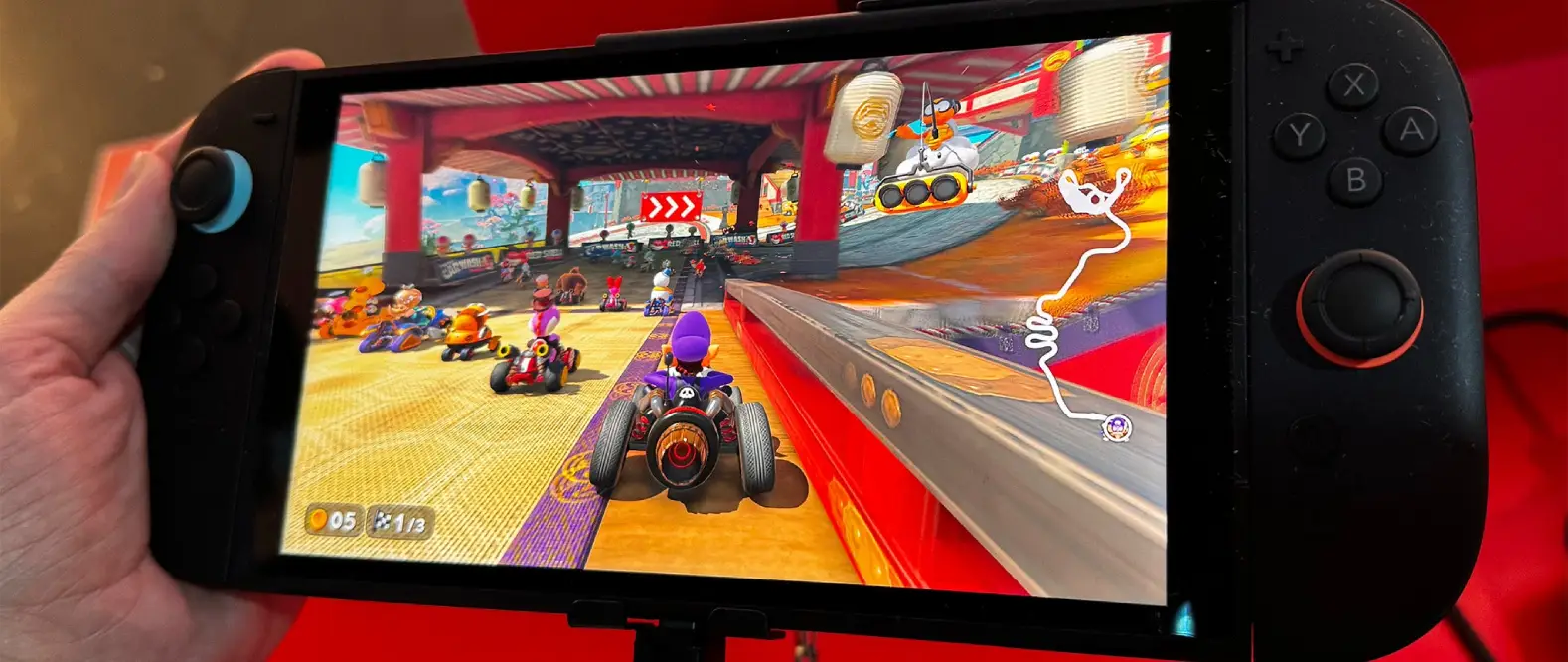
The OLED model’s standout upgrade is exactly what its name suggests — a vivid, high-contrast OLED display that makes a genuine visual difference in handheld and tabletop modes, where you’re looking directly at the built-in screen rather than a TV. It also adds a wider adjustable stand and improved built-in speakers, both useful for tabletop play on a table or plane tray without needing headphones. If your household plays mostly away from the TV, this is the version where the extra investment is most visible day to day.
Standard Nintendo Switch: The Balanced All-Rounder
The original standard Switch remains the most flexible option, docking to a TV for full living-room multiplayer sessions, undocking for handheld play on the go, or standing up for tabletop mode with the Joy-Cons detached for local two-player games. For families who genuinely use all three modes — TV gaming in the evening, handheld play during travel, tabletop multiplayer with friends — this remains the sensible default choice.
Nintendo Switch Lite: Best for Dedicated Handheld Play
The Lite strips out TV docking entirely, existing purely as a handheld device with a smaller, lighter body and non-detachable controls built directly into the unit. For buyers who know they’ll only ever play on the go — commuters, kids who won’t be connecting to a family TV, or anyone buying a genuinely portable-only device — it’s the lowest-priced entry into the Switch ecosystem, though it sacrifices local multiplayer flexibility since the controls can’t be shared as separate Joy-Cons.
Feature Comparison
| Feature | Switch OLED | Standard Switch | Switch Lite |
|---|---|---|---|
| Display | 7″ OLED, vivid contrast | 6.2″ LCD | 5.5″ LCD, built-in |
| TV docking | Yes | Yes | No |
| Detachable Joy-Cons | Yes | Yes | No (fixed controls) |
| Best for | Handheld/tabletop screen quality | Balanced TV + handheld use | Dedicated handheld only |
| Local multiplayer flexibility | High (shareable Joy-Cons) | High (shareable Joy-Cons) | Low (fixed controls) |
Don’t Forget: Extra Joy-Con Controllers
Whichever model you choose (aside from the Lite), a spare pair of Joy-Con Controllers genuinely extends how the console gets used at home — instant two-player tabletop games without pairing anything extra, and a backup pair if one Joy-Con develops stick drift over time, a well-documented long-term wear point on the original design. City Tech currently stocks genuine Joy-Con Controllers at KES 10,500.
Family Buying Tips
- If multiple family members will share one console across TV and handheld use, the standard Switch remains the most practical default
- If it’s primarily for one child’s handheld use with limited TV access, the Lite is the more budget-conscious choice
- If screen time is mostly handheld/tabletop rather than TV-docked, the OLED’s display upgrade is genuinely worth experiencing in person before deciding
Frequently Asked Questions
What’s the difference between Nintendo Switch OLED and Lite?
The OLED model docks to a TV, has detachable Joy-Cons, and features a vivid OLED screen. The Lite is handheld-only, with fixed non-detachable controls and a smaller LCD screen, at a lower price point.
Can I play all the same games on any Switch model?
Yes. All three models run the same game library and software — the differences are in screen quality, TV docking capability, and controller flexibility, not game compatibility.
Do Joy-Con controllers wear out?
Analog stick drift is a well-documented long-term wear issue on Joy-Con controllers after extended use. Keeping a spare pair on hand is a sensible precaution, particularly for heavily used family consoles.
Where to Buy in Kenya
At City Tech, we stock genuine Nintendo Joy-Con Controllers as part of our gaming accessory range. Browse the full Gaming collection → for current stock and pricing.
